
Books
Books by Language
Filter by price
Books by language
- English (1)
Books by language
----------------------------
Curricula Books
- ● AS/A Level - Cambridge
- ● AS/A Level - Edexcel
- ● Grade 1
- ● Grade 2
- ● Grade 3
- ● Grade 4
- ● Grade 5
- ● Grade 6
- ● Grade 7
- ● Grade 8
- ● KG 2
- ● Play, Nursery & KG 1
- ● O Level - Cambridge
- ● O Level - Edexcel
- ● প্রাক-প্রাথমিক
- ● প্রথম শ্রেণি
- ● দ্বিতীয় শ্রেণি
- ● তৃতীয় শ্রেণি
- ● চতুর্থ শ্রেণি
- ● পঞ্চম শ্রেণি
- ● ষষ্ঠ শ্রেণি
- ● সপ্তম শ্রেণি
- ● অষ্টম শ্রেণি
- ● নবম-দশম
- ● একাদশ-দ্বাদশ
Exam Books
Faculty & Department Books
- ● Accounting
- ● Anthropology
- ● Apparel Mnf & Tech.
- ● BBA
- ● Bengali
- ● Botany
- ● Chemistry
- ● Computer Science
- ● Economics
- ● Electronics & Communication
- ● Engineering and Technology
- ● English
- ● Fashion Design & Tech.
- ● Finance & Banking
- ● Geography & Environment
- ● History
- ● Home Economics
- ● Hospitality Management
- ● Information Sc. & Library Mgt.
- ● Islamic History & Culture
- ● Islamic Studies
- ● Knitwear Mnf. & Tech.
- ● Law
- ● Management
- ● Marketing
- ● Mathematics
- ● Physics
- ● Political science
- ● Psychology
- ● Philosophy
- ● Public Administration
- ● Social Work
- ● Sociology
- ● Statistics
- ● Zoology
General Categories
Ages
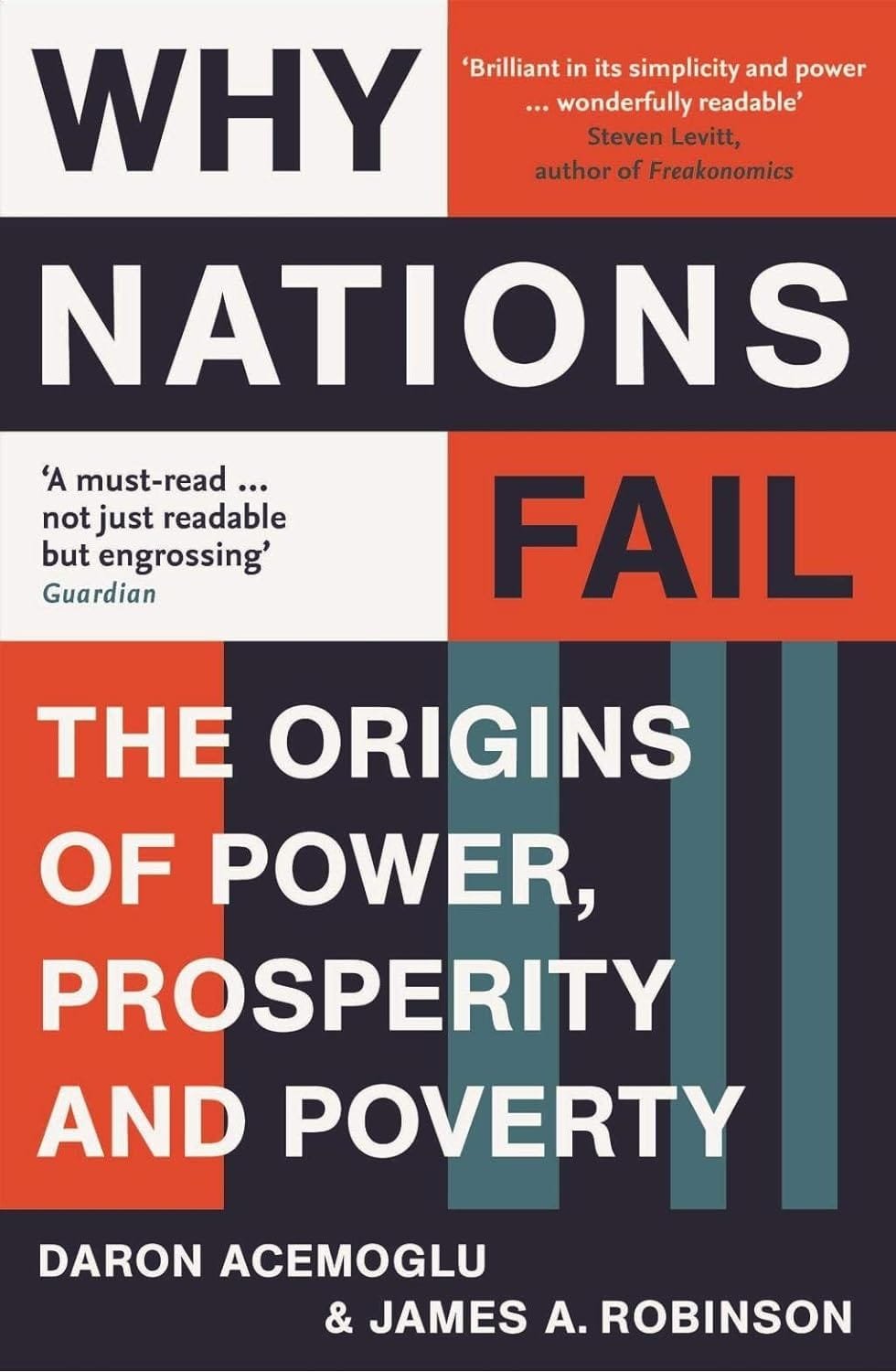
WHY NATIONS FAIL: THE ORIGINS OF POWER, PROSPERITY AND POVERTY
"Why Nations Fail: The Origins of Power, Prosperity, and Poverty," co-authored by Daron Acemoglu and James A. Robinson, is a groundbreaking exploration into the factors that shape the divergent destinies of nations. The book delves into the intricate interplay of political and economic institutions, arguing that inclusive institutions are the key drivers of prosperity, while extractive institutions lead to poverty and stagnation. Through a comprehensive analysis of historical and contemporary case studies, the authors contend that political and economic inclusivity fosters innovation, economic growth, and social mobility, creating a virtuous cycle of development. Conversely, extractive institutions concentrate power and wealth in the hands of a few, stifling progress and perpetuating poverty. "Why Nations Fail" offers a compelling framework that challenges deterministic theories and highlights the pivotal role of institutions in shaping the trajectory of nations.
